

The Building Years: When Everything Stacks Up at Once
In The Many Phases of Womanhood, I named the building years as the phase where career, partnership, and often the question of parenthood pile on top of each other, with little time left to notice you've disappeared a bit inside it all. If early adulthood is about figuring out who you are apart from your family of origin, the building years are about holding onto that person once the world starts asking a lot of her at once.
"Building" doesn't have one script, and I want to be clear about that up front. For some women this phase includes deciding, actively and on purpose, that motherhood isn't the path they want, and doing the ongoing work of holding that decision against a world that keeps assuming otherwise. For others it means still sitting with the question, genuinely unsure, while everyone around them talks like it's already settled. And for others it means wanting a family and running into real obstacles along the way, whether that's the grief of infertility or pregnancy loss, or wanting to build a family and not having a partner who's reliably there to build it with. All of that is still the building years. The stacking and the disappearing inside it happen either way.

Disappearing inside the roles
This phase rarely looks like a crisis from the outside. You're likely doing well by every visible measure: advancing at work, holding together a relationship (or navigating the absence of one), managing a family life that may or may not be unfolding the way you hoped, keeping everything else running. That's exactly what makes it hard to name. Nothing is obviously wrong, so the exhaustion and the quiet sense of absence get filed under "this is just what this season is like," rather than something worth paying attention to.
What actually happens is subtler. Each role asks you to be a slightly different version of yourself, and there's no time between them to check in with the version that's actually you underneath all of it. You become excellent at anticipating what's needed, at everyone's job but your own inner life. Over time, the roles stop feeling like things you do and start feeling like the whole of who you are, until "what do I want" becomes a genuinely hard question to answer.
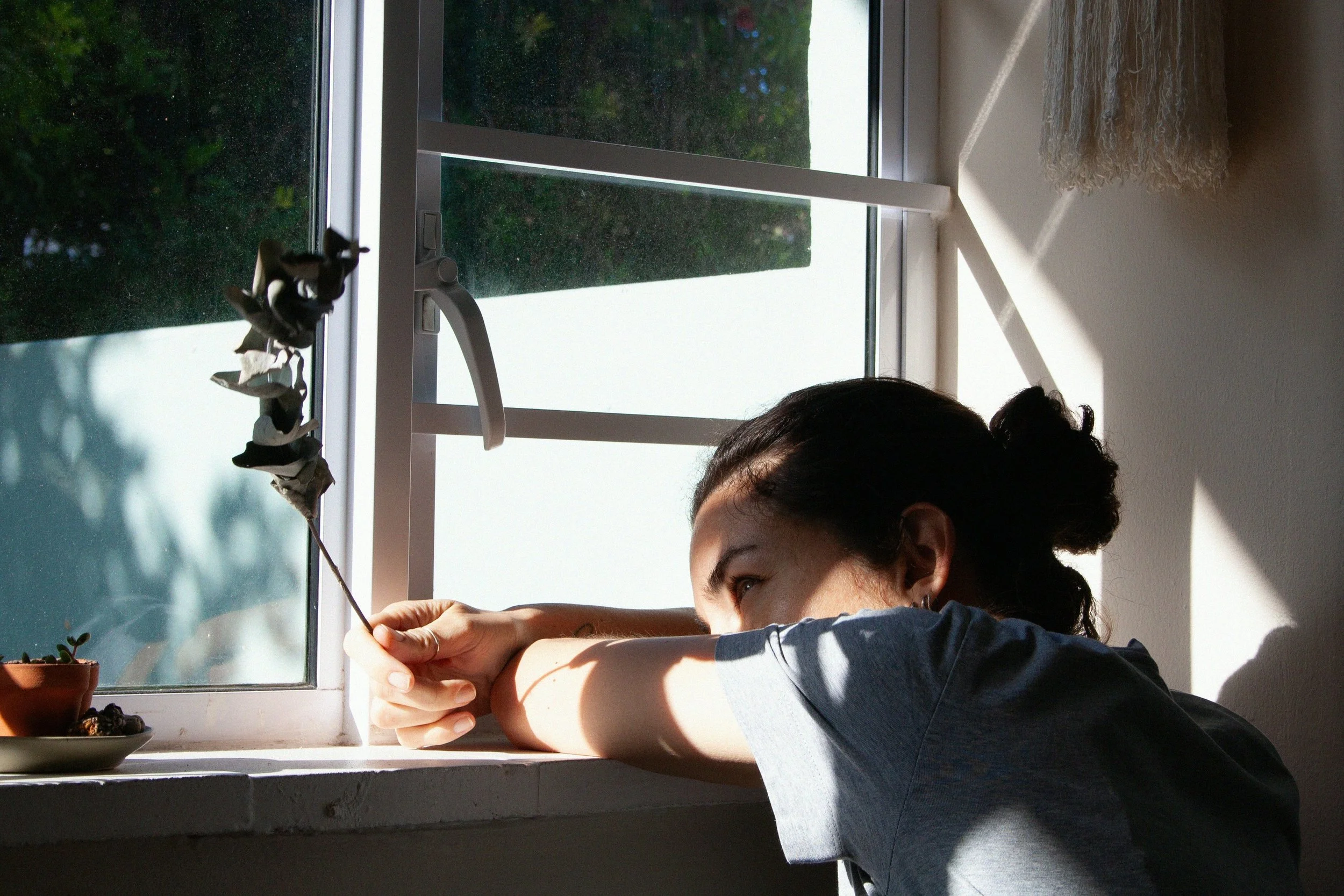
What this looks like in the room
Women in this phase often come in not because any one thing has gone wrong, but because they've hit a low hum of resentment or numbness they can't quite locate the source of. Sometimes it surfaces as irritability with a partner who hasn't done anything different. Sometimes it's a wave of grief that shows up at an odd moment, mourning a version of life or self that quietly got set aside. Sometimes it's simply: I don't know what I actually want anymore, I only know what everyone needs from me.
For others, it shows up more directly around parenthood itself: the exhausting grief of infertility or a pregnancy loss that people expect you to move past quickly, the loneliness of wanting a family without a partner who's actually there for it, or the fatigue of defending a decision not to have children to people who won't stop asking. These aren't separate from the building years, they're part of it, and they deserve their own room in therapy rather than being treated as a side note to the "real" version of this phase.
We work on separating the roles from the self underneath them, not by dropping the roles, but by finding where you've gone missing inside them. That often means looking at where "being needed" became the only way you learned to feel valuable, and what it might look like to matter to yourself too, not just to everyone counting on you.
Why this phase deserves its own attention
The building years can stretch on for a decade or more, which makes it easy to treat the exhaustion as permanent rather than as a sign something needs to shift. But this phase doesn't have to be something you just survive until it's over. The patterns you set here, around whose needs count, how much of yourself you're allowed to keep, tend to carry forward into midlife and beyond. Attending to it now, rather than waiting for burnout or a bigger rupture to force the issue, is its own form of care.
If this phase sounds familiar, I'd love to connect.