

The Many Phases of Womanhood
Who you needed to be at 22 is not who you need to be now. That sounds obvious written out, but it’s rarely how it feels when you’re living it. Most of us carry the same coping strategies, the same definitions of “enough,” the same instincts for staying safe and loved, from one decade into the next — even long after the life that shaped those strategies has changed completely. I work with a lot of women navigating exactly this. Not a single crisis, but a quieter realization: the version of yourself that got you here doesn’t quite fit anymore, and you’re not sure who’s supposed to replace her.

The phases rarely announce themselves
There’s no clear line where one phase of womanhood ends and the next begins. You don’t wake up one day newly in “the caregiving years” or “the midlife recalibration years.” It creeps in. You just start noticing that something that used to work — the way you handled stress, the way you related to your partner, the way you measured your own worth — doesn’t land the same way it used to. And instead of updating the strategy, most of us just push harder at the old one, assuming the problem is us, not the fact that we’ve quietly outgrown it.
A few of the phases I see most often in my work:
Early adulthood, when you’re first defining who you are apart from your family of origin, often while still operating on inherited rules about who you’re allowed to be.
The building years, when career, partnership, and sometimes motherhood stack on top of each other, and there’s little time to notice you’ve disappeared a bit inside the roles.
Midlife recalibration, when the identity that got you this far starts to feel too small, or too exhausting to keep maintaining, and something in you starts asking for more truth and less performance.
Empty nest and beyond, when the roles that organized your days for decades loosen, and the question of who you are outside of them gets asked directly, sometimes for the first time.
None of these are a straight line, and you don’t have to fit neatly into one to recognize yourself in this. Most women move between them, revisit earlier ones, or feel two at once.
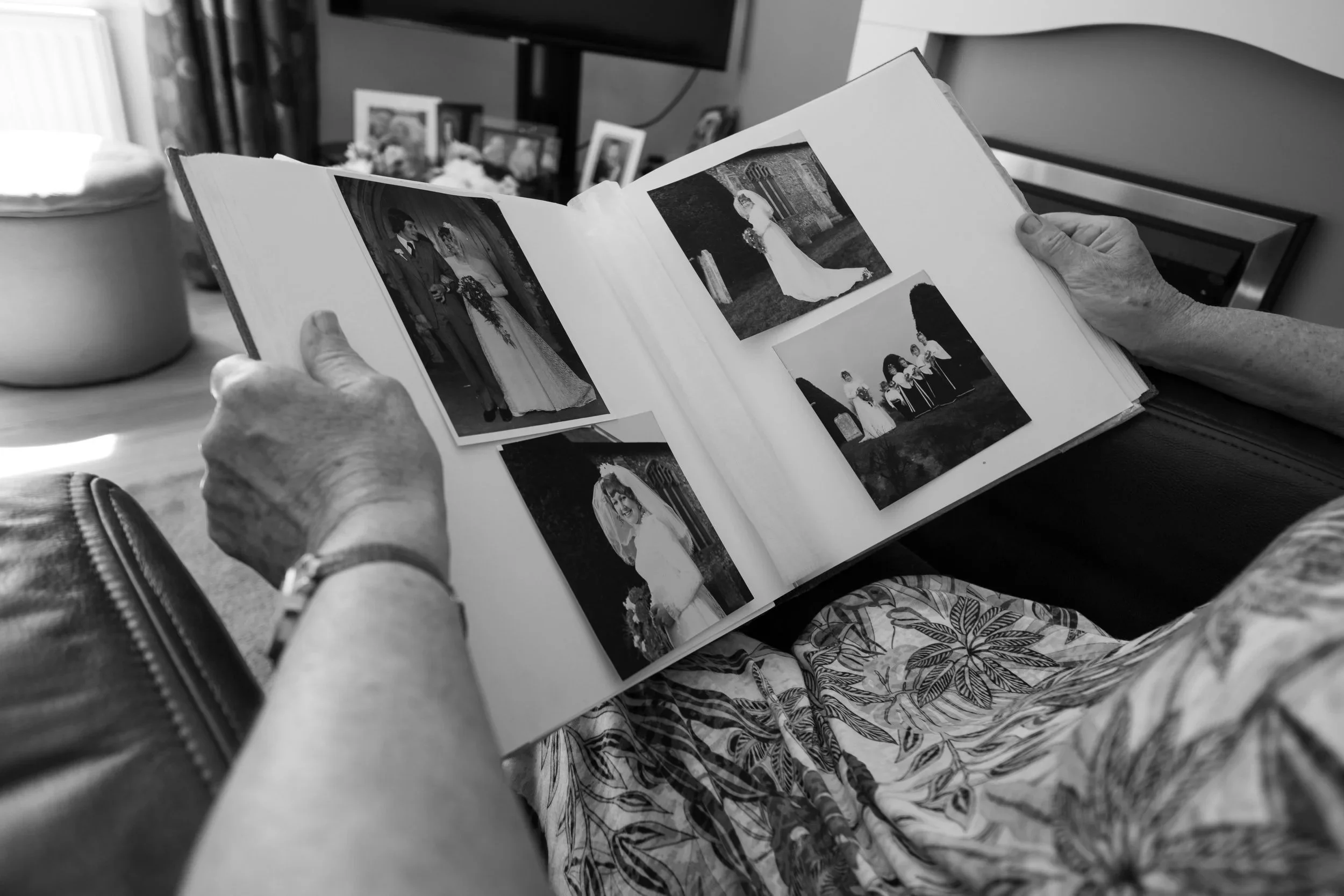
Why this matters in therapy
The support that helped you at one phase can quietly stop working at the next, and it’s easy to mistake that for personal failure rather than what it actually is: outgrowing a version of yourself that used to make sense. Good therapy adjusts with you. It doesn’t ask you to keep performing the same coping strategies that got you through your twenties; it helps you notice when they’ve stopped serving you and gives you room to build something that actually fits who you are now.
This is exactly the kind of work I do with clients in individual therapy.
This is the first in a short series exploring these phases in more depth — what each one tends to ask of you, what commonly gets stuck, and what real movement through it can look like. If you see yourself somewhere in this and want to talk about what phase you’re in right now, I’d love to connect.